
*Last updated: November 2026*
Quick Answers
How wide should an asphalt driveway be?
A single-car asphalt driveway should be at least 10 to 12 feet wide, and a two-car driveway should be 18 to 24 feet wide. If you regularly park side by side, open doors next to each other, or have a truck or trailer, go toward the wider end.
How big should a driveway turnaround be?
A turnaround is typically a 12 to 16 foot wide flared section off the side of the driveway. It lets you turn around and pull out forward instead of backing onto a busy road.
How wide should a private road or long rural driveway be?
For two cars to pass, plan 16 to 18 feet. We recommend 20 feet of paved width with compacted gravel shoulders, and fire departments often require 18 to 20 feet for emergency access.
---
Why Does Driveway Width Matter?
Width is one of the few things you can't easily change after the asphalt goes down. Too narrow, and tires roll off the edge, the edges crumble, and the lawn turns to ruts. All State Paving has been paving driveways across Delaware, Sunbury, Powell, Marysville and the rest of Central Ohio since 1979, and getting the width right at the planning stage is far easier than widening later.
What Are the Standard Driveway Widths?
| Driveway type | Recommended paved width |
|---|---|
| Single-car driveway | At least 10–12 feet |
| Two-car driveway | 18–24 feet |
| Turnaround / flared section | 12–16 feet wide |
| Private road, two cars passing | 16–18 feet (20 feet recommended) |
| Fire department access (often required) | 18–20 feet |
These come straight from the specs we build to on our driveway paving and private road paving projects.
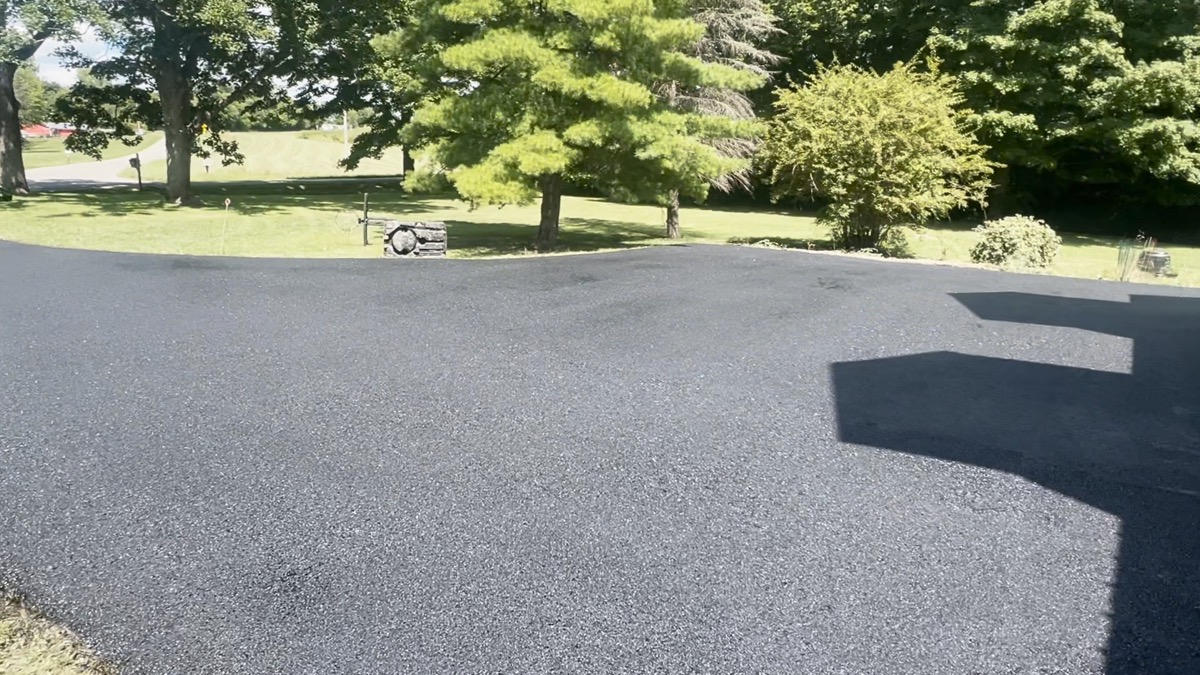
!Wide asphalt driveway with a turnaround area at a home in Sunbury, Ohio
*A paved turnaround on a driveway project in Sunbury.*
When Should You Add a Turnaround?
A turnaround is worth it when:
- •Your driveway exits onto a busy road like a county or state route, where backing out is risky.
- •Your driveway is long, curved or sloped, making it hard to back down straight.
- •You have teenage drivers, a trailer, or visitors who don't know the driveway.
The turnaround is built on the same compacted base as the main driveway so it doesn't settle or crack at the joint.
Can You Widen an Existing Asphalt Driveway?
Yes. Widening or extending a driveway means building a new compacted base alongside the old one and tying the new asphalt into the existing surface with a strong, clean joint. If the existing driveway is worn, many homeowners widen and overlay at the same time so the whole surface matches. See our asphalt overlay vs. replacement comparison to see which fits.
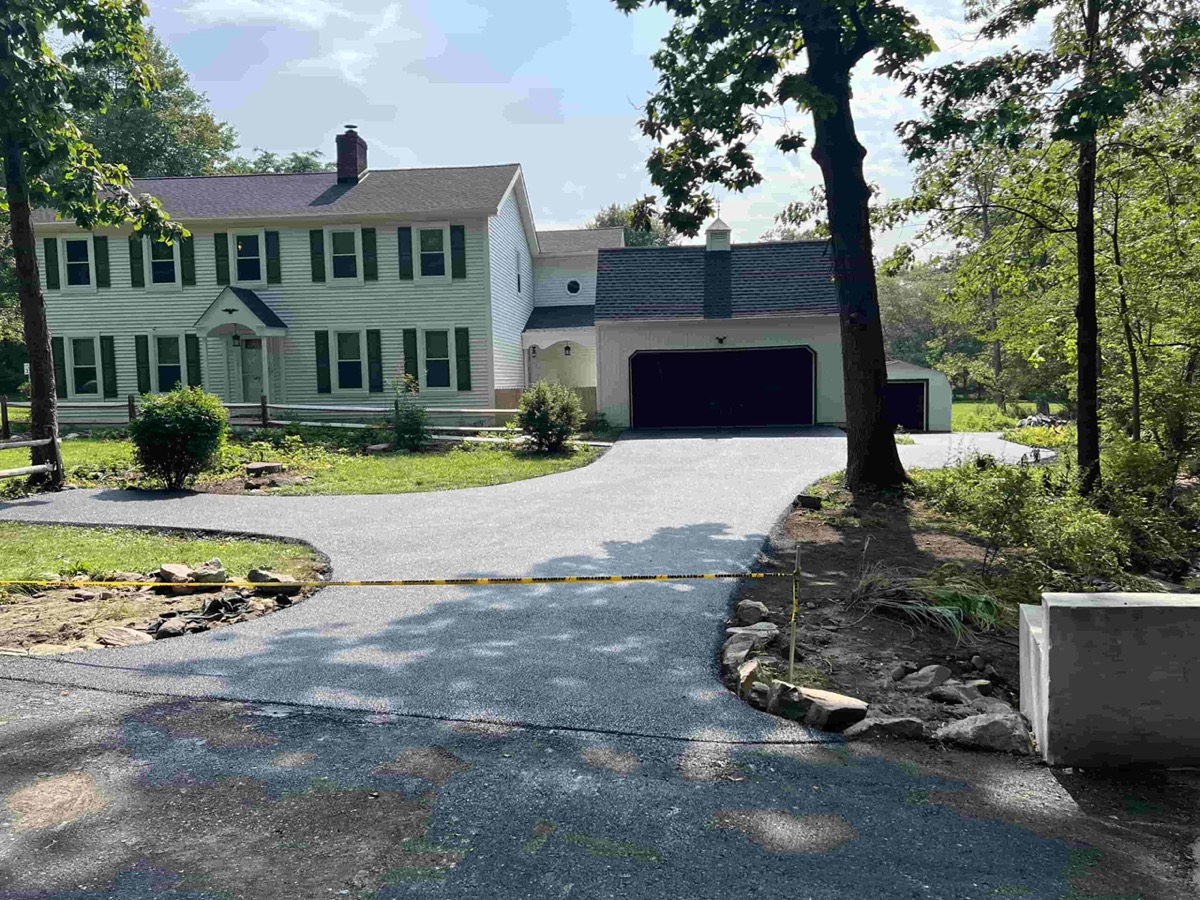
!Extended asphalt driveway at a colonial-style home
*A driveway extension project in Marysville.*
What Else Affects the Layout?
- •Garage apron: the transition to your garage floor must be matched in elevation so there's no lip or gap.
- •Drainage: every driveway should be graded to move water away from your foundation, garage and low spots.
- •Road approach: many Central Ohio townships and cities have their own rules for the section where your driveway meets the road. Check with your local zoning or engineering office before you finalize the plan.
For a broader look at your options, see our residential paving services.
Is Now a Good Time to Plan a Wider Driveway?
Yes. Paving season in Central Ohio runs late April through October, when temperatures hold above 50°F. Late fall and winter are ideal for measuring, deciding on width and turnaround layout, and getting a written estimate so you're ready to go in spring.
---
Frequently Asked Questions
Is 10 feet wide enough for a driveway?
Ten feet is the bare minimum for one car. Twelve feet gives room to open doors and step out onto pavement instead of grass. If you drive a full-size truck, go wider.
How wide is a two-car driveway?
Typically 18 to 24 feet. Twenty feet or more lets two vehicles park side by side with doors open.
Does a wider driveway cost more?
Yes, because asphalt is priced by square footage. In most of Central Ohio, new asphalt runs about $3 to $7 per square foot, and $4 to $8 in Powell and Dublin.
Can I add a parking pad next to my driveway?
Yes. A parking pad is built like a widening: new compacted base, new asphalt, tied in with a clean joint to the existing driveway.
Do I need a permit to widen my driveway?
It depends on your city or township, especially where the driveway meets the road. Check with your local zoning or engineering office before work starts.
*Ready to plan the right width for your driveway? Contact All State Paving or call 1-800-568-9954 for a free estimate.*
Need Paving Services?
Contact All State Paving today for a free estimate on your project.
Recent Posts
- How Wide Should an Asphalt Driveway Be?November 18, 2026
- How Thick Should an Asphalt Driveway Be in Ohio?November 14, 2026
- How Much Does an Asphalt Overlay Cost in Central Ohio?November 11, 2026
- ADA Parking Lot Striping in Ohio: Requirements, Layout & ComplianceAugust 3, 2026
- Private Road Paving in Ohio: A Property Owner's GuideJuly 27, 2026
- How Often to Sealcoat Asphalt in Ohio: A Contractor's ScheduleJuly 20, 2026
- Asphalt vs. Concrete Driveways in Ohio: Which Is Better?July 13, 2026
- Best Time to Pave Asphalt in Ohio: Season & Temperature GuideJuly 6, 2026
- Asphalt Paving in Delaware, Ohio: Costs, Timeline & What to ExpectJune 29, 2026
- Parking Lot Paving Cost in Central Ohio: 2026 Price GuideJune 22, 2026
- 5 Benefits of Asphalt Paving for Central Ohio Property OwnersMarch 15, 2026
- Asphalt Repair vs. Replacement: How to Know Which Your Ohio Pavement NeedsFebruary 28, 2026
- Asphalt Maintenance for Ohio Winters: Freeze-Thaw, Salt & Spring CareJanuary 10, 2026
- Commercial Paving in Ohio: A Business Owner's GuideDecember 5, 2025
- Why Seal Coating Is Critical for Central Ohio AsphaltNovember 20, 2025
- How to Choose the Right Paving Contractor in Central OhioOctober 12, 2025