
*Last updated: November 2026*
Quick Answers
How thick should an asphalt driveway be in Ohio?
A standard residential asphalt driveway in Central Ohio should have 2 to 3 inches of hot-mix asphalt over 4 to 6 inches of compacted limestone aggregate base. If heavier vehicles use the driveway, such as RVs, box trucks or farm equipment, both layers should be thicker.
Which layer matters more, the asphalt or the base?
The base. The stone base carries the load and drains water. A thick layer of asphalt on a thin or poorly compacted base will still crack and sink, especially through Ohio's freeze-thaw winters.
How thick should commercial and farm pavement be?
Commercial lots typically get 2 to 3 inches of asphalt over 6 to 8 inches of base, and 3 to 4 inches over 8 to 10 inches in high-stress zones. Farm lanes built for loaded grain trucks call for 3 to 4 inches of asphalt over 8 to 10 inches of base.
---
Why Does Driveway Thickness Matter So Much in Central Ohio?
Ohio pavement goes through dozens of freeze-thaw cycles every winter. Water that gets under or into the pavement freezes, expands about 9 percent, and pushes the surface apart. A properly built, well-drained base keeps that water moving out instead of sitting under your driveway. Family-owned since 1979, All State Paving has built driveways across Delaware, Powell, Sunbury, Marysville and the rest of Central Ohio, and the driveways that fail early almost always have one thing in common: a base that was too thin or never properly compacted.
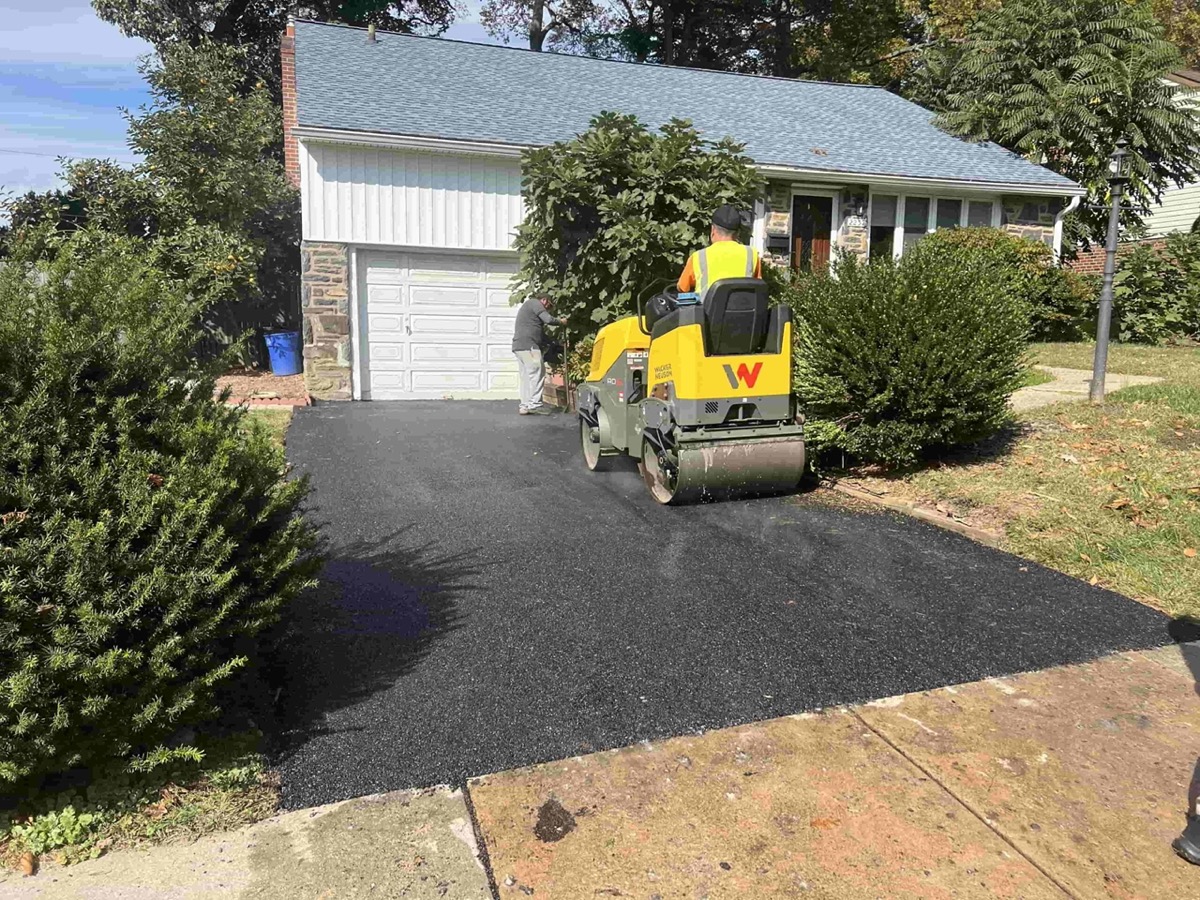
!Small roller compacting a new asphalt driveway in front of a house
*Compacting fresh hot-mix asphalt on a residential driveway.*
What Thickness Do Different Projects Need?
| Project | Hot-mix asphalt | Compacted aggregate base |
|---|---|---|
| Standard residential driveway | 2–3 inches | 4–6 inches |
| Commercial parking lot (standard areas) | 2–3 inches | 6–8 inches |
| Commercial high-stress zones | 3–4 inches | 8–10 inches |
| Farm lane for loaded grain trucks | 3–4 inches | 8–10 inches |
These are the specs we build to on our driveway paving, commercial paving and farm lane paving projects.
How Is the Base Built?
The base isn't just dumped and spread. On a new driveway we:
1. Excavate and grade the area, checking drainage slope so water runs away from your foundation and garage.
2. Place limestone aggregate in lifts (layers), compacting each one.
3. Re-check grade and slope before any asphalt goes down.
4. Place hot-mix asphalt and compact it with a roller while it's still hot.
Skipping lifts or rushing compaction saves time on paving day, but the damage shows up after a winter or two.
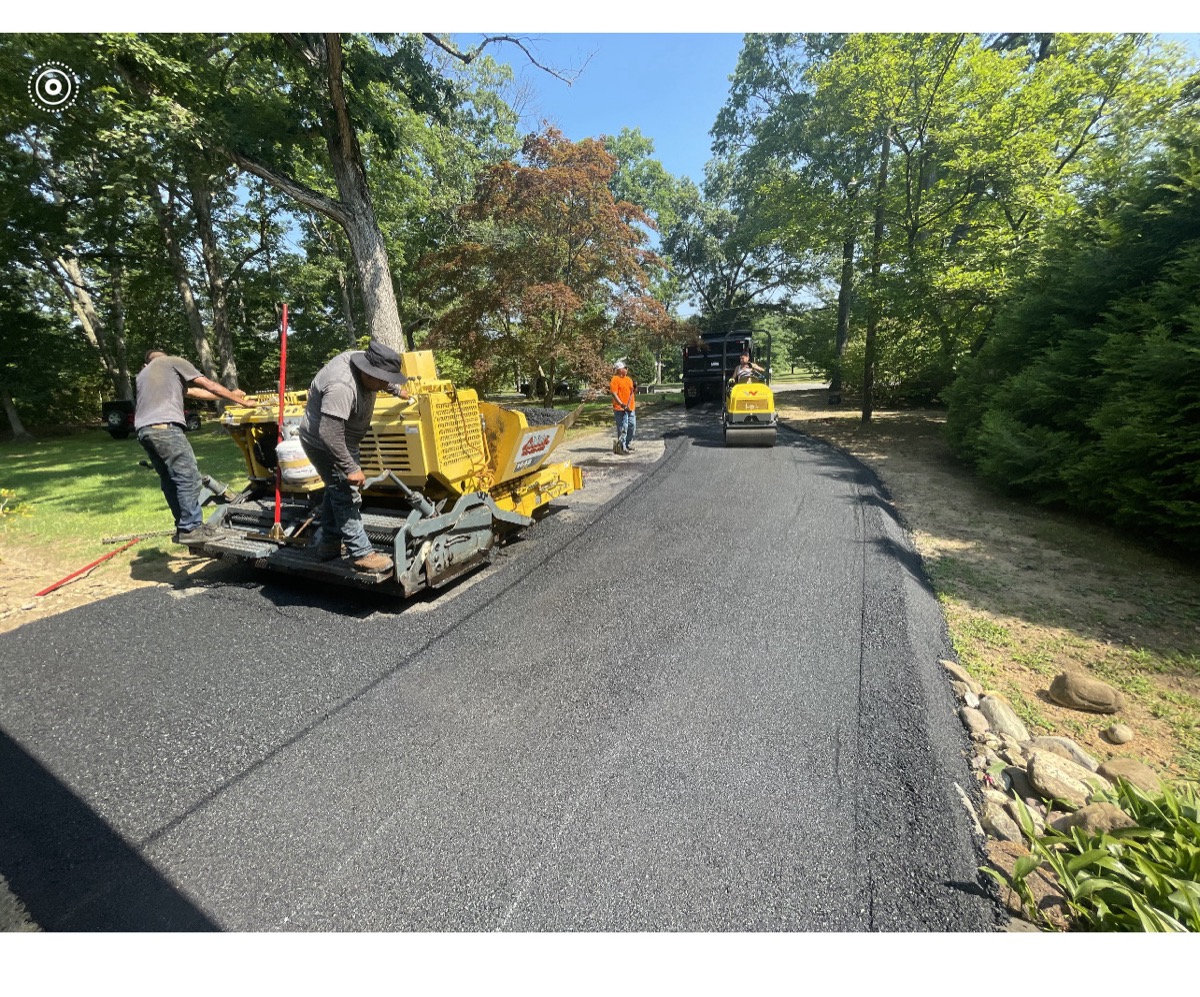
!Paving crew laying hot-mix asphalt with a paver on a tree-lined road
*Placing hot-mix asphalt over a compacted stone base.*
What Questions Should You Ask When Comparing Quotes?
Two quotes that look far apart on price are often far apart on thickness. Ask every contractor:
- •How many inches of asphalt, **after compaction**?
- •How many inches of base, and what kind of stone?
- •Will the existing base be reused, added to or replaced?
- •How will you grade it for drainage?
If a quote doesn't list thickness, ask for it in writing. Our residential paving estimates spell it out. For more on how pavement is designed, the National Asphalt Pavement Association is a good resource.
Is November Too Late to Pave a New Driveway?
For most of Central Ohio, yes. Hot-mix asphalt needs temperatures holding above 50°F and rising, and by mid-November overnight frost is the norm. The good news: winter is the best time to get your driveway measured and quoted, so the base and thickness plan is settled before spring. See our guide to the best time to pave asphalt in Ohio.
---
Frequently Asked Questions
Is 2 inches of asphalt enough for a driveway?
For a standard car-and-SUV driveway, 2 to 3 inches of compacted hot mix is typical, but only over a solid 4 to 6 inch compacted stone base. If heavier vehicles will use the driveway, plan for more.
Do I need a thicker driveway for an RV or work truck?
Yes. Heavier vehicles raise both the asphalt and base thickness. Tell your contractor about any RV, trailer, box truck or equipment that will regularly use the driveway before they quote.
Can you add thickness to my existing driveway?
An overlay adds a new layer over existing asphalt, but only works when the base is still sound. If the base is failing, extra asphalt on top won't fix it. See our asphalt overlay vs. replacement guide.
Why does my driveway have ruts or sunken spots?
Ruts and sunken areas usually point to a base that was too thin, poorly compacted or soaked by poor drainage. That's a base problem, and it typically needs base repair or replacement, not just a surface patch.
How long will a properly built driveway last?
A well-built and well-maintained asphalt driveway typically lasts 20 to 30 years in Central Ohio.
*Planning a new driveway for spring? Contact All State Paving or call 1-800-568-9954 for a free written estimate.*
Need Paving Services?
Contact All State Paving today for a free estimate on your project.
Recent Posts
- How Thick Should an Asphalt Driveway Be in Ohio?November 14, 2026
- How Much Does an Asphalt Overlay Cost in Central Ohio?November 11, 2026
- ADA Parking Lot Striping in Ohio: Requirements, Layout & ComplianceAugust 3, 2026
- Private Road Paving in Ohio: A Property Owner's GuideJuly 27, 2026
- How Often to Sealcoat Asphalt in Ohio: A Contractor's ScheduleJuly 20, 2026
- Asphalt vs. Concrete Driveways in Ohio: Which Is Better?July 13, 2026
- Best Time to Pave Asphalt in Ohio: Season & Temperature GuideJuly 6, 2026
- Asphalt Paving in Delaware, Ohio: Costs, Timeline & What to ExpectJune 29, 2026
- Parking Lot Paving Cost in Central Ohio: 2026 Price GuideJune 22, 2026
- 5 Benefits of Asphalt Paving for Central Ohio Property OwnersMarch 15, 2026
- Asphalt Repair vs. Replacement: How to Know Which Your Ohio Pavement NeedsFebruary 28, 2026
- Asphalt Maintenance for Ohio Winters: Freeze-Thaw, Salt & Spring CareJanuary 10, 2026
- Commercial Paving in Ohio: A Business Owner's GuideDecember 5, 2025
- Why Seal Coating Is Critical for Central Ohio AsphaltNovember 20, 2025
- How to Choose the Right Paving Contractor in Central OhioOctober 12, 2025