Quick Answers
How many ADA accessible spaces does my Ohio parking lot need?
The number is set by total spaces under the federal ADA Standards, which Ohio follows. A lot with 1–25 spaces needs 1 accessible space; 26–50 needs 2; 51–75 needs 3; 76–100 needs 4. At least one accessible space in every lot must be van-accessible. The count goes up as your lot grows.
What does ADA-compliant striping actually require?
Compliant striping means a space at least 8 feet wide with a marked access aisle beside it (5 feet for car spaces, 8 feet for van spaces), the international symbol of accessibility painted on the pavement, proper signage, and a route to the entrance that stays under a 2% slope. Faded paint that fails these specs can put you out of compliance.
Who's liable if my parking lot isn't ADA compliant?
The property owner and business operator are both exposed. Non-compliant lots invite ADA complaints, lawsuits, and fines, and faded or missing accessible markings are one of the most common citations. Re-striping on a regular schedule is the cheapest insurance against that liability.
---
ADA Parking Lot Striping Requirements Every Ohio Business Owner Should Know
After 40-plus years and more than 2,500 projects across Central Ohio, we've re-striped a lot of parking lots that were a complaint waiting to happen. Faded lines, missing access aisles, no van space, a symbol you can barely make out. The good news: getting compliant is usually a straightforward line striping job, not a full rebuild. Here's how the rules actually work in Ohio.
How Many Accessible Spaces You Need
Ohio enforces the federal 2010 ADA Standards for Accessible Design (ada.gov). The required number of accessible spaces is tied to the total number of spaces in the lot:
- •1 to 25 spaces — 1 accessible
- •26 to 50 — 2 accessible
- •51 to 75 — 3 accessible
- •76 to 100 — 4 accessible
- •101 to 150 — 5 accessible
Beyond that the ratio keeps climbing. The key rule people miss: at least one of every six accessible spaces must be van-accessible, and any lot with accessible parking needs at least one van space.
Layout and Dimensions That Pass Inspection
Striping is where most lots fall short. To meet the standard:
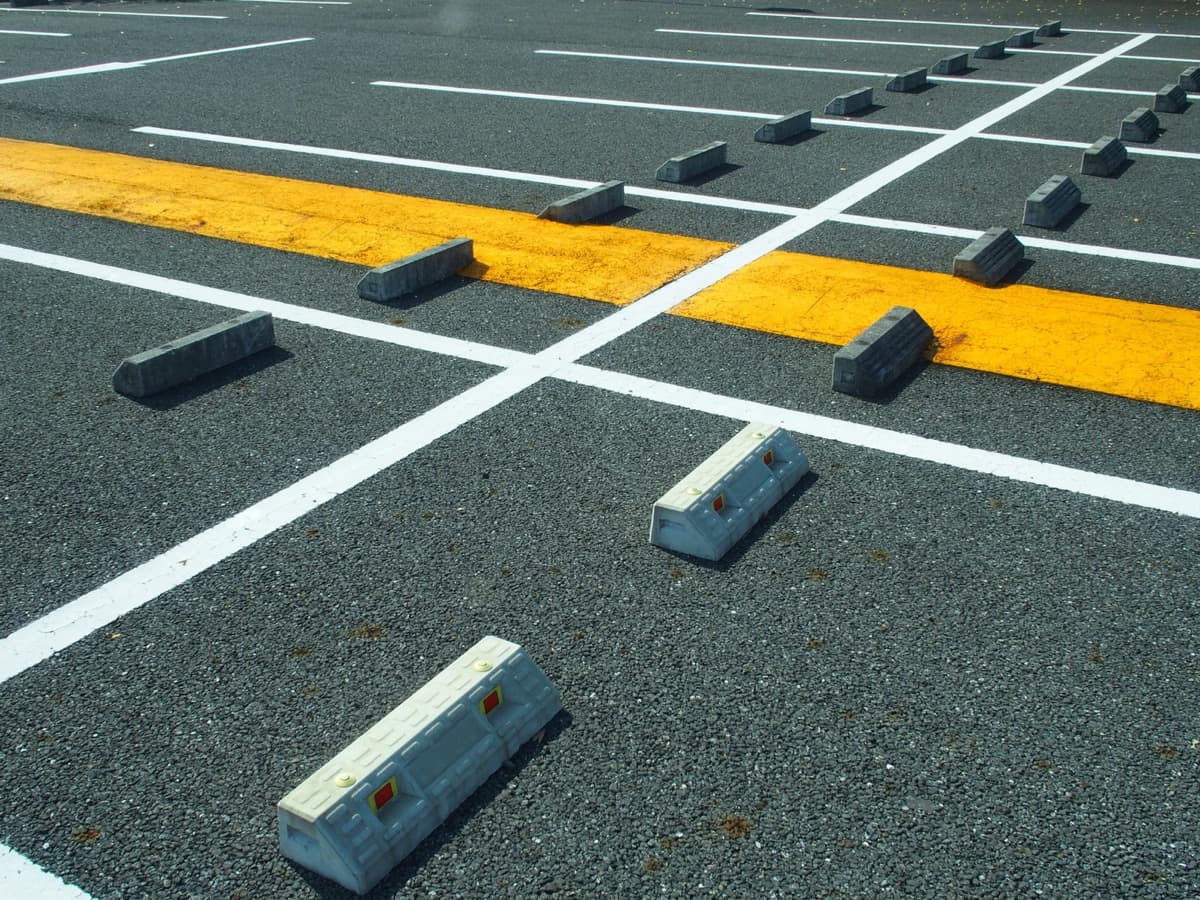
- •Car-accessible space: at least 8 feet wide with a 5-foot access aisle.
- •Van-accessible space: at least 8 feet wide with an 8-foot access aisle (or an 11-foot space with a 5-foot aisle).
- •Access aisles must be striped with diagonal lines and cannot overlap drive lanes. Two spaces may share one aisle.
- •The accessible route from the space to the building entrance must keep running slopes at or below 5% and cross-slopes at or below 2%.
- •Signage must be mounted at least 60 inches off the ground so it stays visible when a vehicle is parked, with the "van accessible" designation added where required.
Spaces also need to sit on the shortest accessible route to the entrance — you can't tuck them in the back corner.
Why Ohio Weather Makes Re-Striping a Recurring Job
Central Ohio freeze-thaw cycles are hard on pavement and harder on paint. Plow blades, road salt, UV, and standing water break striping down faster than in milder climates. We typically see lots in Delaware, Columbus, Dublin, and Westerville lose crisp, compliant markings within 18 to 24 months. Striping is best applied when temperatures hold above 50°F, which in Ohio means late April through October. Plan your re-stripe inside that window so the paint cures properly and lasts.
Restripe, Repair, or Repave First?
Fresh paint on cracked, crumbling asphalt won't last and won't read clean. Before re-striping we walk the lot and flag whether you need parking lot paving work first — crack filling, sealcoating, or patching — so the new layout lands on a sound surface. On a properly maintained lot, sealcoat every 2 to 3 years and a quality asphalt surface can last 20 to 30 years. New asphalt generally runs in the $3 to $7 per square foot range depending on size and prep.
Why Central Ohio Property Owners Choose All State Paving
We've been a family-owned paving contractor since 1979, serving Delaware, Columbus, Marysville, Powell, Sunbury, and the surrounding counties. Over 2,500 projects and 1,800-plus clients later, business owners call us because we show up on time, lay out accessible spaces to the current ADA spec the first time, and give a straight answer on whether you need a simple re-stripe or full commercial paving. Estimates are always free.
---
Frequently Asked Questions
How much does ADA parking lot striping cost in Ohio?
Re-striping an existing lot is one of the most affordable paving services, usually priced per linear foot or per stall, so a small lot is a few hundred dollars and a large commercial lot scales from there. ADA spaces cost a bit more because of the access aisle, painted symbol, and signage. The bigger cost is non-compliance — fines and lawsuits dwarf the price of fresh, correct markings.
How often should I re-stripe my parking lot?
In Central Ohio, plan to re-stripe every 1 to 2 years. Freeze-thaw cycles, road salt, snowplows, and heavy traffic wear lines faster here than in warmer states. High-traffic retail and medical lots may need it annually. A good practice is to re-stripe right after sealcoating, since the fresh black surface makes new lines crisp and extends their visible life.
Can I just repaint over my old faded ADA spaces?
Sometimes, but not always. If the layout already meets the current 2010 ADA Standards and the asphalt is sound, a clean re-stripe works. But many older lots were striped to outdated specs — too-narrow aisles, no van space, missing signage. If yours predates the current standard, repainting the old layout keeps you non-compliant. We measure first, then stripe to today's code.
Do small businesses and churches have to comply with ADA parking rules?
Generally yes. The ADA applies to most places of public accommodation and commercial facilities, which covers retail, restaurants, offices, medical buildings, and many nonprofits and houses of worship with public parking. The required number of accessible spaces scales with lot size, so even a small lot typically needs at least one van-accessible space. When in doubt, get the lot evaluated.
What's the most common ADA striping mistake you see in Central Ohio lots?
Missing or undersized van-accessible spaces and faded access aisles. Plenty of lots have a painted accessible symbol but no proper 8-foot van aisle, or the diagonal aisle striping has worn away entirely. We also see signage mounted too low and accessible spaces placed far from the entrance. All of these are fixable in a single striping visit on a sound surface.
*Ready to make sure your lot is compliant? Contact All State Paving for a free striping estimate.*
Need Paving Services?
Contact All State Paving today for a free estimate on your project.
Recent Posts
- ADA Parking Lot Striping in Ohio: Requirements, Layout & ComplianceAugust 3, 2026
- Private Road Paving in Ohio: A Property Owner's GuideJuly 27, 2026
- How Often to Sealcoat Asphalt in Ohio: A Contractor's ScheduleJuly 20, 2026
- Asphalt vs. Concrete Driveways in Ohio: Which Is Better?July 13, 2026
- Best Time to Pave Asphalt in Ohio: Season & Temperature GuideJuly 6, 2026
- Asphalt Paving in Delaware, Ohio: Costs, Timeline & What to ExpectJune 29, 2026
- Parking Lot Paving Cost in Central Ohio: 2026 Price GuideJune 22, 2026
- 5 Benefits of Asphalt Paving for Central Ohio Property OwnersMarch 15, 2026
- Asphalt Repair vs. Replacement: How to Know Which Your Ohio Pavement NeedsFebruary 28, 2026
- Asphalt Maintenance for Ohio Winters: Freeze-Thaw, Salt & Spring CareJanuary 10, 2026
- Commercial Paving in Ohio: A Business Owner's GuideDecember 5, 2025
- Why Seal Coating Is Critical for Central Ohio AsphaltNovember 20, 2025
- How to Choose the Right Paving Contractor in Central OhioOctober 12, 2025